


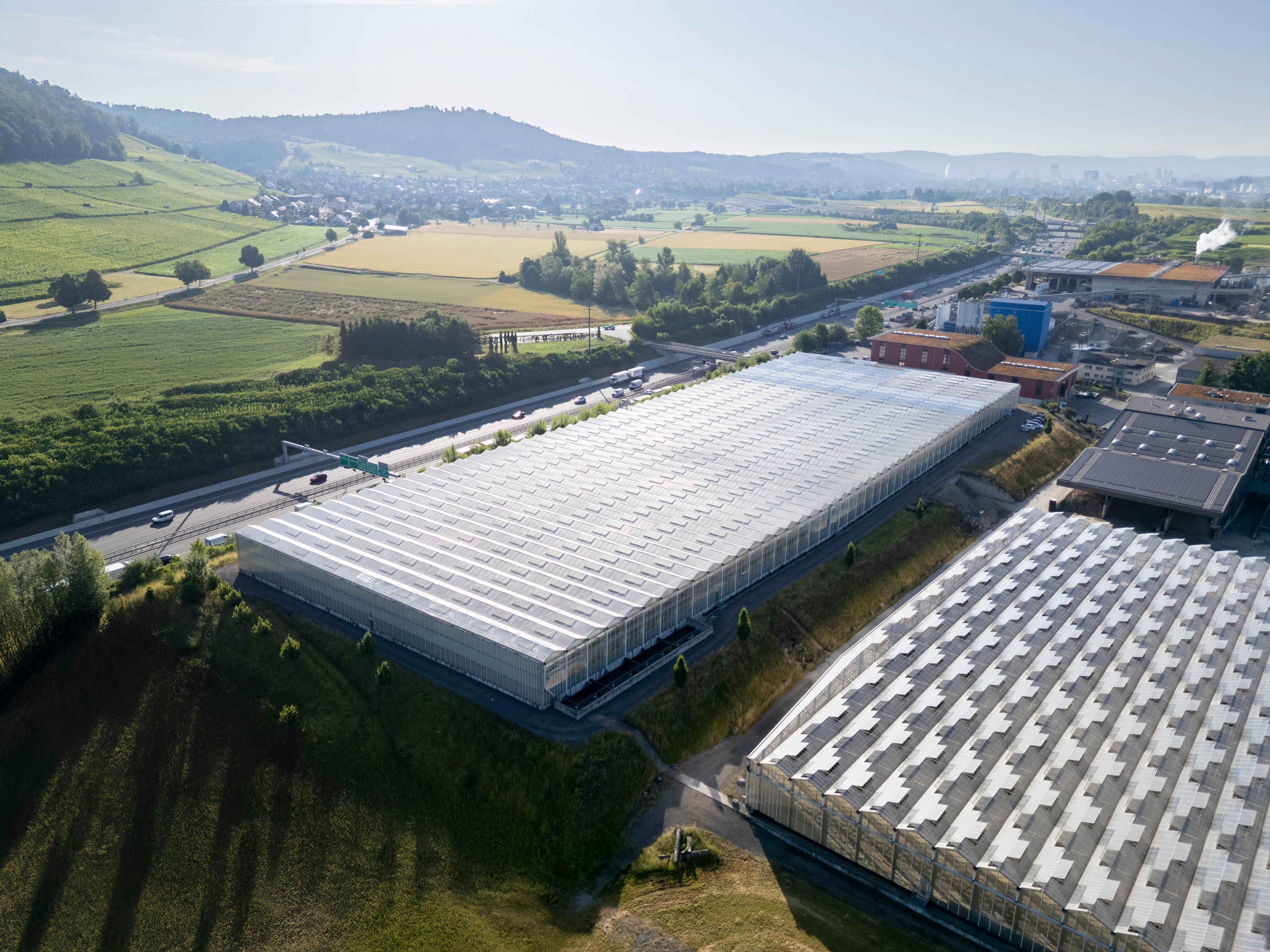
Client: PhytoVitality AG, Weiningen, Switzerland
Facility: 14,000 m² greenhouse · 30–40 staff · 1+ tonne/month production
Status: Swissmedic-licensed, GACP-certified, supplies EU-GMP processing partners
Partnership: 5 years (Since April 2021)
A qualified person (QP) is mandatory. GACP requires it. GMP requires it. Swissmedic requires it.
That person doesn't disappear when you implement a compliance system.
A paper-based system at PhytoVitality's scale would require 1–2 additional administrative staff just to compile data from papers, organize batch records, and prepare submissions.
With Cannavigia integrated into daily operations, that additional hire is never needed.
What this means:
Before Cannavigia, before production was even running, Bart den Hertog, Phytovitality’s Managing Director, and his team faced a structural problem: at an industrial scale, paper-based compliance doesn't work.
"With 30, 40 people working across different stages: mother room, vegetative area, production hall, harvesting area, each with their own responsibilities," Bart says, "it's kind of a nightmare to do that from paper."
A dedicated person chasing spreadsheets and batch records across the facility. Manual reconciliation before every Swissmedic submission. No way to trace a batch quickly if a question arises. No visibility across departments.
And underneath the labour problem was a harder one: error. In a facility where a mix-up between narcotic and non-narcotic batches is a regulatory violation, "close enough" is not a standard that survives an inspection.
PhytoVitality's answer: Don't retrofit compliance after the fact. Design it in from the start.
One year into their first production cycle, PhytoVitality met with Cannavigia. Both were early-stage. Canvavigia was building the platform. PhytoVitality was still learning the rhythm of their new facility.
But they shared something: the belief that compliance and efficiency weren't in tension; they were the same problem.
"By accident or by incident," Bart recalls, "when we met Cannavigia, I actually believe that efficiency and compliance are two very important factors for them. That was a good match."
What followed was not a standard software implementation. It was a partnership where Cannavigia sat down together with PhytoVitality to think through how compliance could become part of daily operation, and not a separate reporting task.
They worked through waste protocols. They mapped GDP workflows. They trained the staff. They appointed an internal project manager as a single point of contact, which helped clarify questions from the floor.
Cultivation tracking first. Post-harvest next. Equipment management last. Each module fits into a system people already understand.

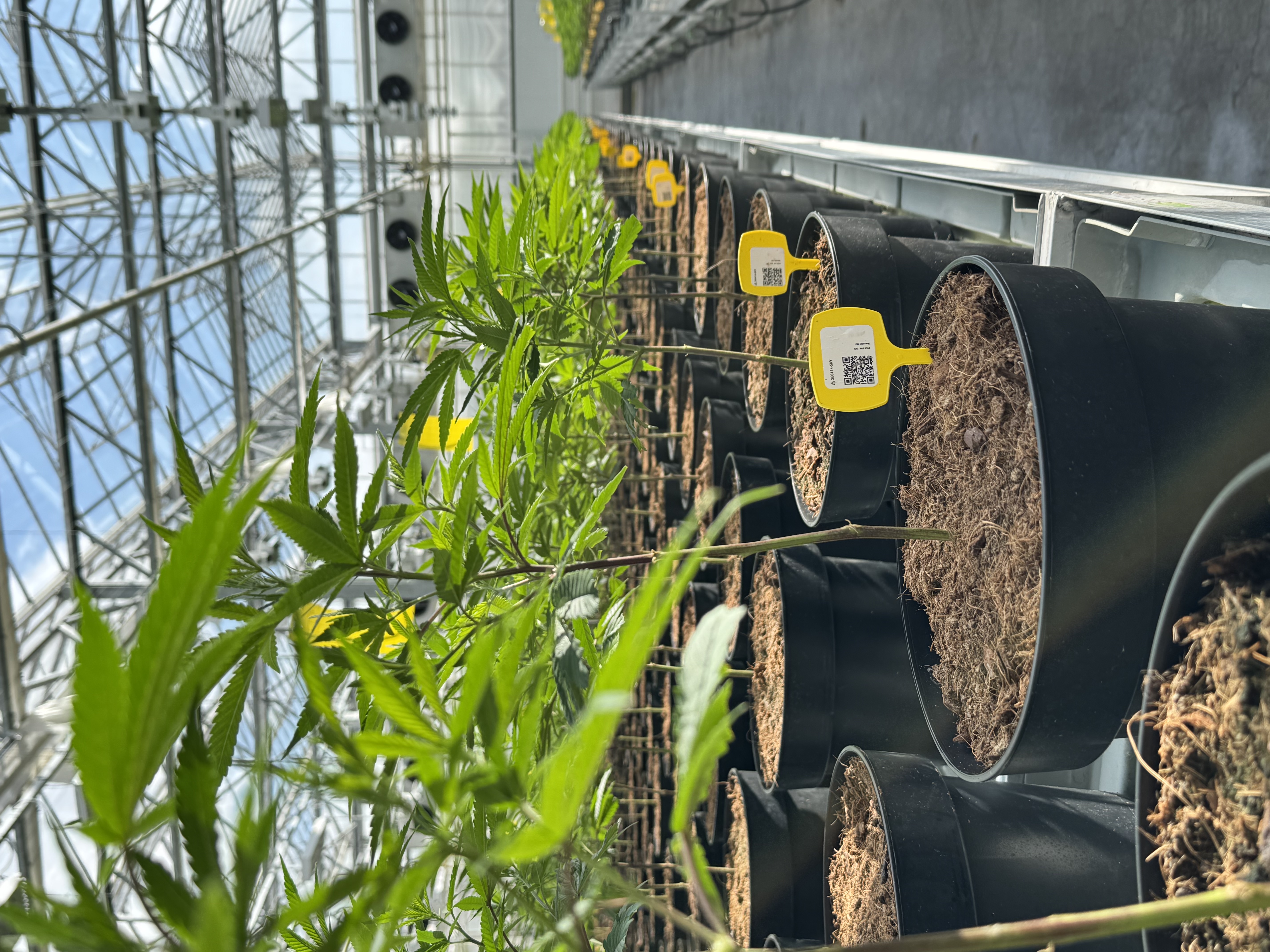
Walk into the facility and you see the system immediately.
Every batch gets a label. Every plant in that batch carries a QR code. Different batches use different colours. A team leader can see, at a glance, which batch is in the mother room, which is flowering, which is being harvested.
"When I have visitors in the facility, I start my tour in the mother room," Bart says. "And the first thing they see is a QR code. It gives me the right angle to explain how our batch definition works, how we operate the facility, how compliance works."
Jan, Cannavigia's Project Manager, observes that at PhytoVitality, "It is not an extra task they do on top. It is integrated into the daily routine workflow. Staff is generally well versed in using the system to log their daily activities."
This matters because compliance systems fail when they feel bolted on. When they create extra work. When they interrupt the real job. At PhytoVitality, the logging is the job. A team member scanning a batch code, entering harvest data, logging waste weight, is including that task in the production work that generates a compliance record.
How this happens:
Every weight is captured:
All of this feeds into a batch certificate, a document Swissmedic inspectors read to determine if a batch was managed correctly.
For the quality manager, a complete batch history is available on demand, without waiting for information from multiple departments.
A qualified person still runs PhytoVitality's compliance and quality operations. That hasn't changed.
What did change: PhytoVitality never had to hire 1–2 additional administrative staff to compile data from papers, organize batch records, and prepare submissions.
The avoided cost:
✅ The QP doesn't assemble batch certificates from multiple sources the night before submission. The certificate is continuously compiled from integrated data. Their job is to review a complete, organized document and make the approval decision.
✅ Five years straight with no reconciliation failures. No rejected submissions. No rework driven by compliance issues.
✅ Every gram accounted for. Narcotic waste disposal is a critical regulatory checkpoint. Every gram is logged against the correct batch, weighed, and tracked to disposal. Inspectors can cross-check waste logs against disposal records and find them in agreement.
✅ Everyone knows the system. Jan's observation: "Staff is generally well versed in using the system to log their daily activities." This isn't incidental—it's proof the system was integrated into training, not bolted on afterward.
Swissmedic inspectors who work in Swiss cannabis compliance now know Canvavigia as a system that makes their job easier.
When an inspector walks into a facility running Cannavigia, several things shift:
✅ The batch trace question becomes answerable immediately. An inspector asking "show me the complete handling history of batch XYZ" is asking the most fundamental compliance question. At PhytoVitality, this requires pulling a report. Five minutes. Complete. Auditable.
✅ The waste log matches reality. The batch certificate reflects the actual production process, not a narrative created for the inspector.
Bart makes a critical distinction: having the system is not the same as operating it well.
"It's not only the stamp. The inspectors come on-site and they really dig deeper into what you're doing. When they see that you work with Cannavigia, it helps. But you need to bring it alive. And that makes it actually stronger, because then you can really show the inspector that you know what you're doing."
Five years of continuous operation have proven that PhytoVitality designed the system, alongside Cannavigia, into their operational nervous system. Every team leader scans. Every harvest is logged. Every batch is visible.
Phytovitality saw that a facility of their scale could not operate compliantly on spreadsheets. They chose a partner in their first year, not after a crisis. They trained staff to use the system as part of their job, not as an afterthought. Five years later, they have a Swissmedic-recognised operation, clean inspections, and a relationship with Cannavigia that has evolved from implementation to genuine partnership.
Jan's observation: "Staff is generally well versed in using the system to log their daily activities."
That sentence contains everything. Not because the staff is unusually technical. But because compliance is woven into training, into workflow, into how the facility actually operates.
Bart's advice to another Swiss cultivator building a facility: "If you're a cultivator focused on the medical market, so you want to reach a certain level of compliance, Cannavigia is a really easy-to-use framework to implement that. It's a supporting system. But it's more than that: it's also SOPs, documentation, and actually really doing what you write on paper."
And his reflection: "In the ideal case, I would actually already start to talk with Cannavigia while we're still designing the layouts of the facility. That could have helped us even earlier."
If you're a Swiss cannabis cultivator designing a facility or preparing for licensing, you're asking: When do I implement compliance infrastructure?
PhytoVitality's answer: Before the first inspector walks through the door.
If you're in the design phase:
Talk to your compliance infrastructure partner while you're still drawing facility layouts. It changes how you think about everything downstream.
If you're already operating manually:
"If you're a cultivator focused on the medical market, so you want to reach a certain level of compliance, Cannavigia is a really easy-to-use framework to implement that. It's a supporting system. But it's more than that: it's also SOPs, documentation, and actually really doing what you write on paper."
If you're scaling:
PhytoVitality didn't need more people as they grew. Their system scales without proportional increase in compliance overhead. That's the structural advantage of designing in early.
PhytoVitality and Cannavigia have partnered for five years. This case study reflects observations from that ongoing relationship, including current account management perspective and lessons learned from real operation at scale.


