

Disclaimer: This article is for informational purposes only and does not constitute legal advice. Cannabis laws and requirements differ between EU countries and change over time. Always consult qualified legal and regulatory specialists in your target markets before implementing compliance strategies.
__
In Europe, medical cannabis is increasingly treated like any other high‑risk, tightly controlled product: regulators want to know exactly what it is, where it came from, and how it was handled at every step. Instead of binders and spreadsheets, authorities and supply‑chain partners now expect digital, auditable traceability that can be checked quickly during inspections or recalls.
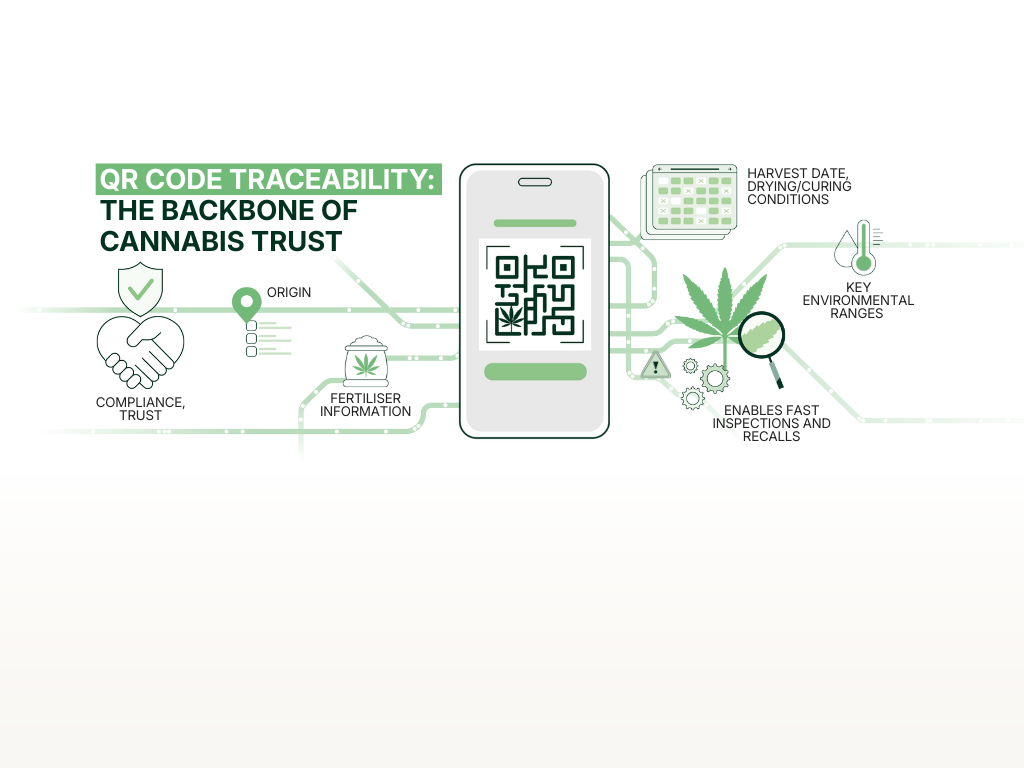
QR codes are becoming the easiest way to connect that internal traceability with the outside world. One scan can show regulators, pharmacists and patients a verified snapshot of a product’s journey—from cultivation and testing to packaging and distribution—without drowning them in paperwork.
Across Europe, several trends are pushing cannabis operators toward digital, QR‑based traceability:
QR codes sit on top of this infrastructure as a simple access point. They do not replace your traceability system—they expose the right parts of it in a way that auditors and consumers can actually use.
Cultivators supplying EU medical or pharmacy‑bound markets are already used to keeping detailed records under EU‑GACP. What is changing is how accessible, structured and connected those records need to be.
Trying to do this with paper or disconnected spreadsheets quickly creates gaps and inconsistencies. Integrated cultivation and compliance software can automatically capture the required data and generate batch‑level QR codes that travel with the material through the supply chain.
Processors sit in the middle of the EU cannabis value chain, turning plant material into medicines, oils, extracts or finished flower for pharmacies. They need to keep the link between what came in and what went out absolutely clear.
With QR code traceability, processors can:
This approach supports both day‑to‑day release by the Qualified Person (QP) and worst‑case scenarios like recalls, where speed and precision matter. A single scan should help you answer: “Exactly which batches, from which grow, using which process conditions, are on the market right now?”
In the EU medical cannabis chain, laboratories are not just service providers; they are a key part of the evidence that products are safe and consistent. QR‑based traceability lets their work be visible without sharing full technical reports in every context.
A lab aligned with this model will:
The final product QR code can then surface a simplified view for patients and pharmacists (“what is in this product and has it passed required tests?”), with deeper detail available for regulators and internal QA.
In countries where cannabis reaches patients via pharmacies or specialist retailers, these last actors become the final control point before the product reaches the end user. QR‑based traceability makes their job easier and more transparent.
With a robust system in place, they can:
This moves the conversation from “just trust us” to “you can see the proof yourself.”
European regulators and policymakers are steadily tightening expectations around product safety, traceability and transparency for cannabis, especially where it is used as a medicine. Even where QR codes are not explicitly mandated, authorities are increasingly expecting:
The risks of not modernising are clear: delayed inspections, forced recalls, reputational damage with pharmacies and payers, and potentially curtailed supply or licence issues in the worst cases.
The upside is equally clear. Operators who build solid digital traceability and consumer‑facing transparency now can:
QR codes are not magic, but they are a very efficient front door to the data that EU regulators, partners and patients increasingly expect to see. When backed by a solid digital backbone—covering cultivation, processing, testing, distribution and retail—they can turn compliance from a burden into a strategic asset.
The operators who will stand out in Europe are those who treat traceability as part of their product, not just an obligation: something that proves quality, builds confidence and makes collaboration with regulators easier rather than harder.
As QR‑based product passports become standard across EU cannabis supply chains, the question is less “if” and more “how” to implement them without disrupting existing processes.
Cannavigia provides a configurable infrastructure that links cultivation, processing, testing, and distribution data to each code, helping teams turn traceability requirements into a coherent digital backbone. Book a demo here.
Sources


