

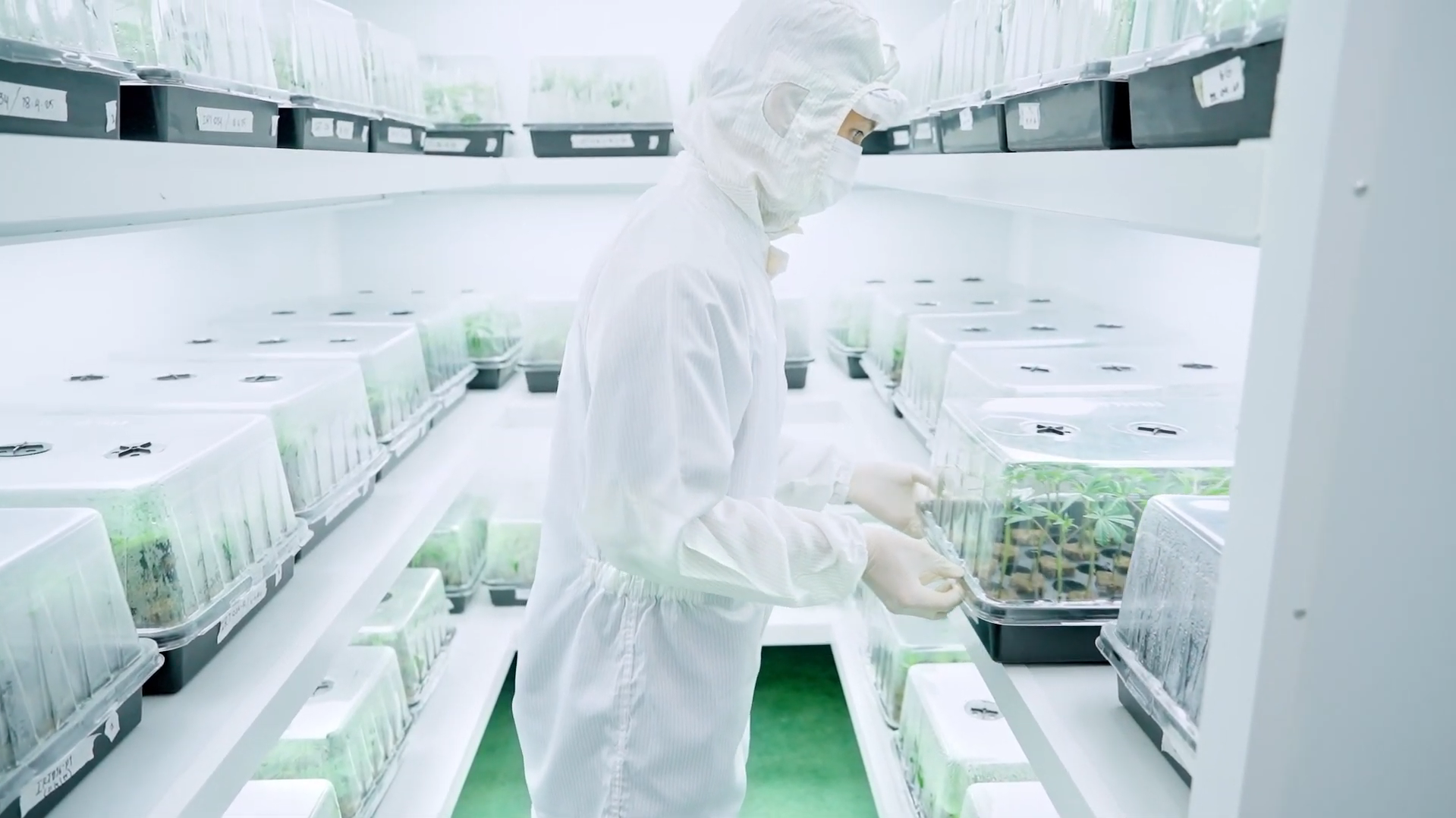
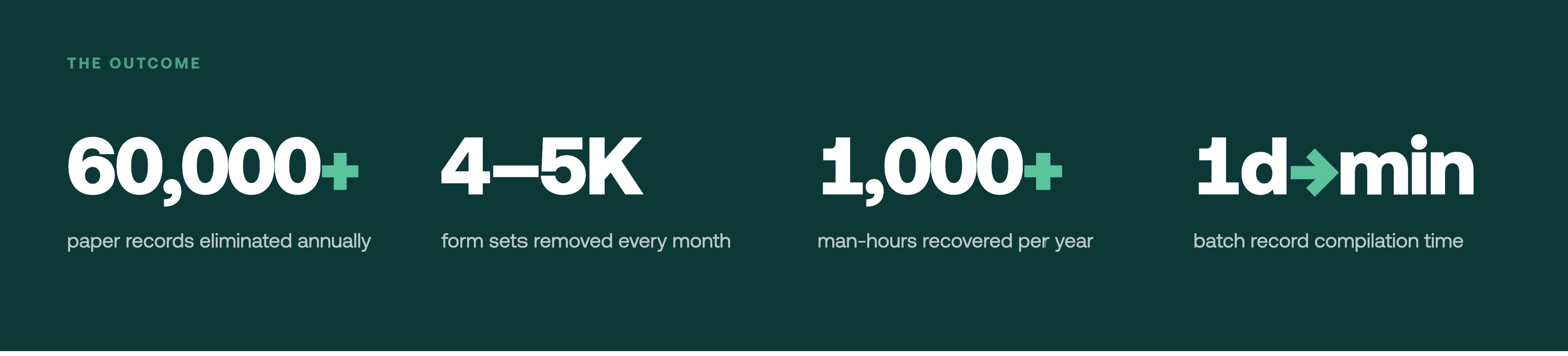
Inside a pharmaceutical-grade ISO 8 clean room, a pen on a clipboard is a contamination risk, not just an inefficiency. Here is how Iridescent Med removed paper from its entire compliance workflow and recovered1,000+ man-hours a year in the process.
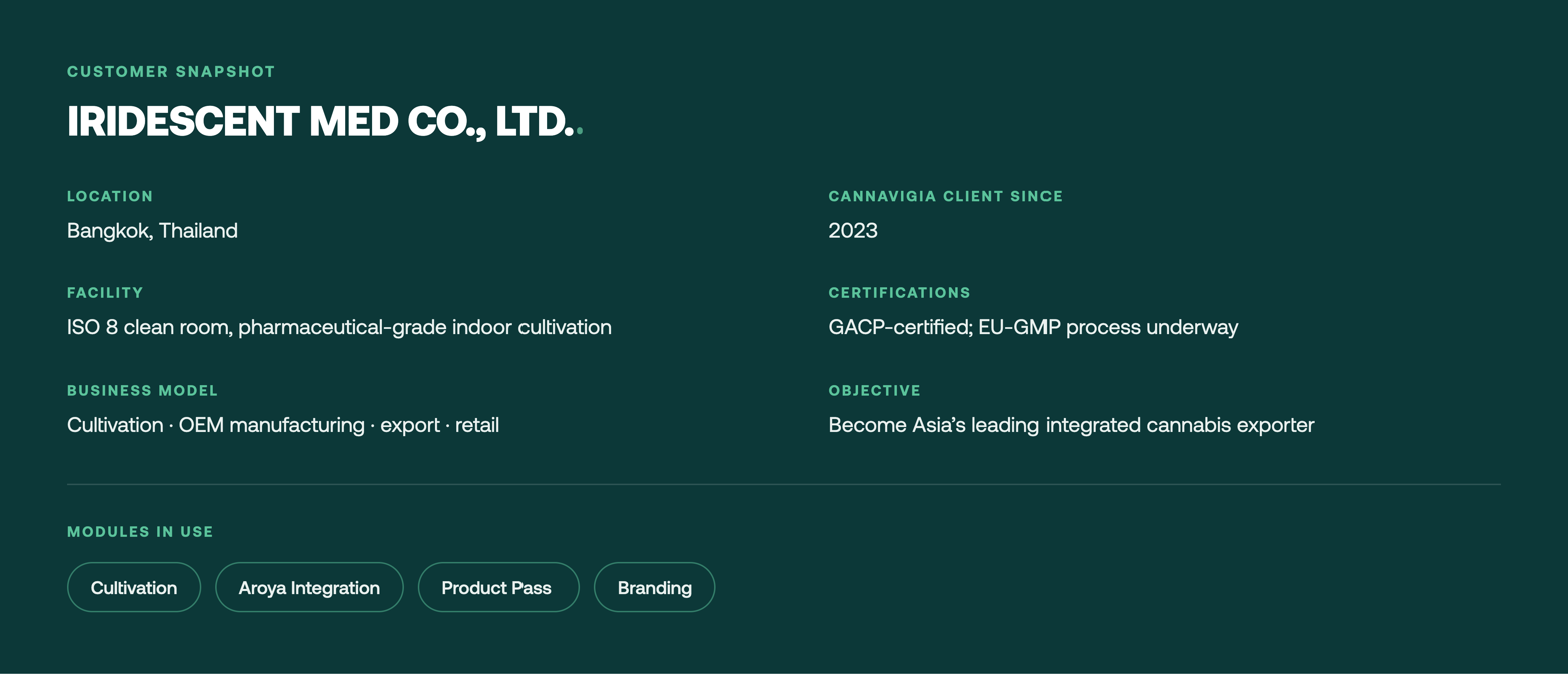
Iridescent Med is one of Thailand's few GACP-certified cannabis cultivators operating at pharmaceutical-grade standards. Their ISO 8 clean room facility in Bangkok grows named cultivars, each with full terpene and cannabinoid profiles, for a market they intend to reach well beyond Thailand's borders.
Their stated objective: become Asia's leading integrated cannabis exporter. At that level of ambition, documentation is a core operational requirement, not a back-office function.
Most cannabis compliance problems are about inefficiency. Iridescent Med had that problem too, but it also faced a second, more serious one: contamination risk.
Their facility operates to ISO 8 clean room standards. Every physical object that enters a controlled grow room is a potential contamination vector. That includes clipboards, printed forms, and the hands that carry them from one department to the next.
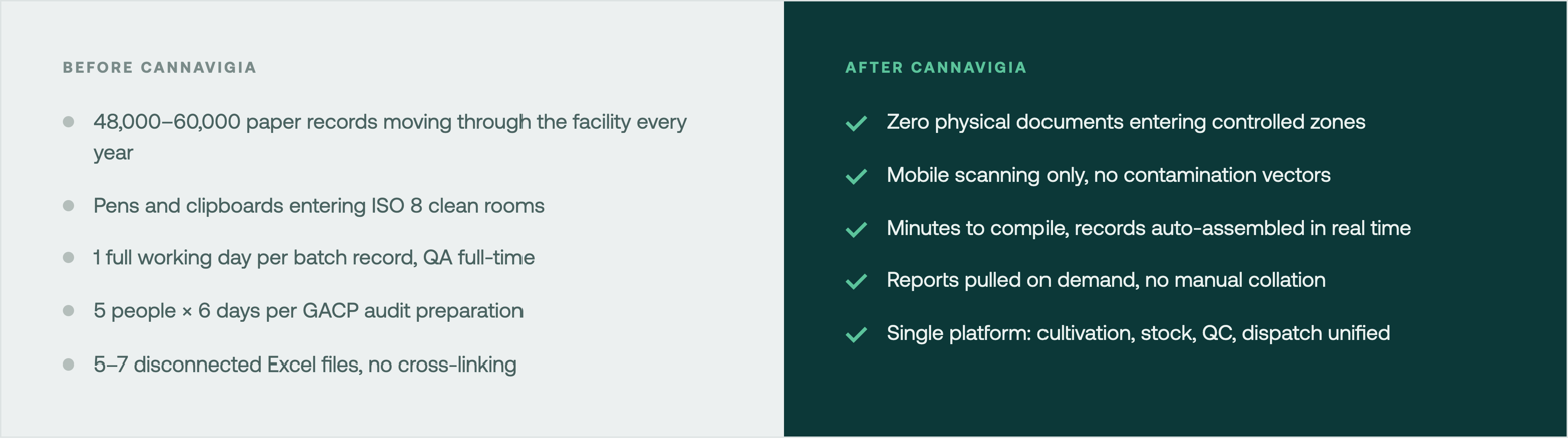
Before Cannavigia, compliance at Iridescent Med ran on paper. Between 4,000 and 5,000 form sets were printed and circulated every single month, adding up to 48,000 to 60,000 records moving through the facility each year. They crossed department boundaries, got carried into grow rooms, got lost between handoffs, and had to be reconstructed when they couldn't be found.
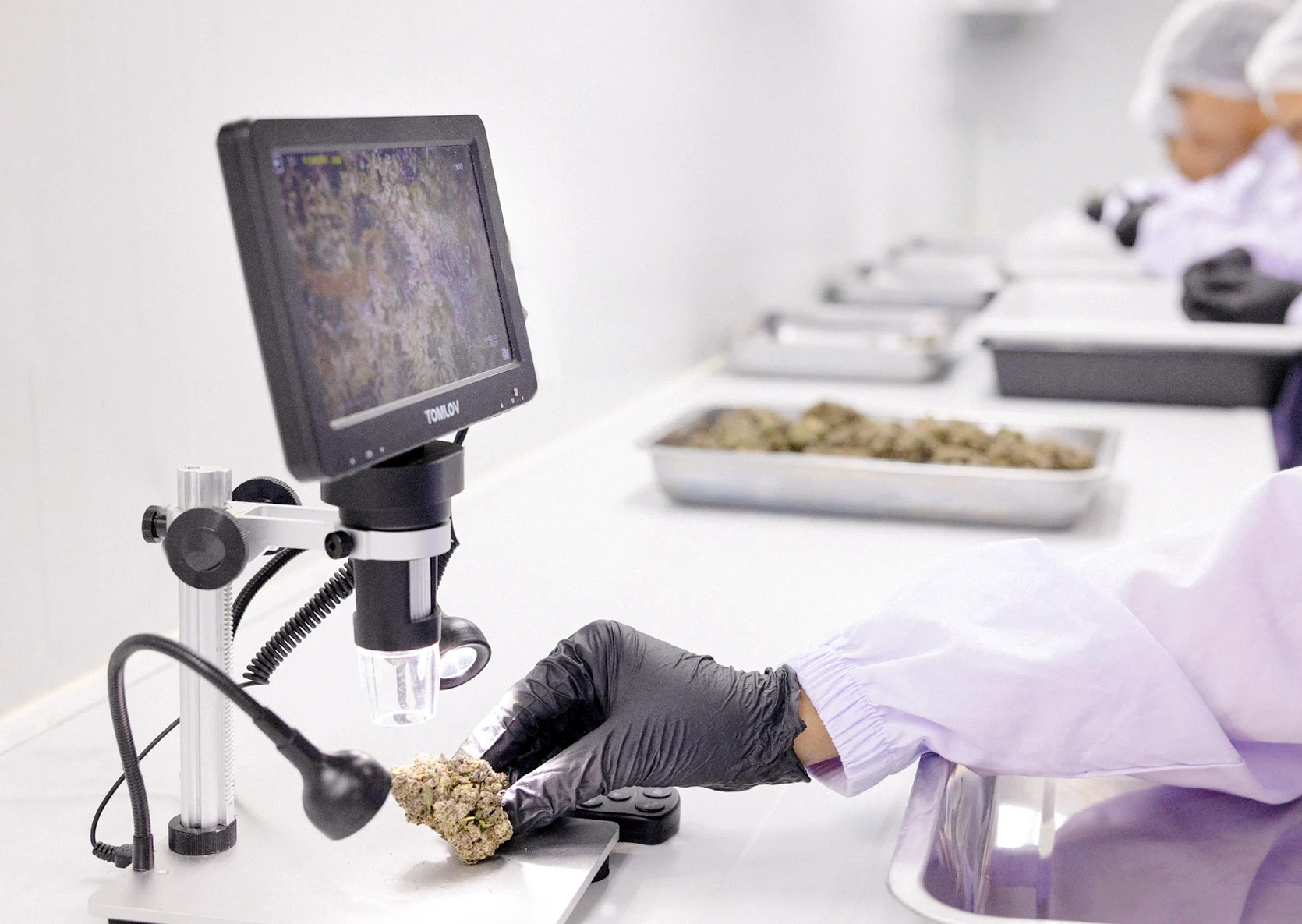
"Our QA was not happy. The pen is going inside the clean room, the paper is moving from one table to another. You start thinking about contamination very quickly."— Sarun Sereethoranakul, Co-Founder & COO, Iridescent Med
The contamination concern was what made this different from a standard paper-versus-digital efficiency argument. Iridescent Med is GACP-certified and pursuing EU-GMP. Their quality standards are pharmaceutical, not agricultural. At that level, the documentation system is part of the contamination control framework, and paper was a gap in it.
Behind the contamination risk sat the compliance burden. Five to seven disconnected Excel files, each siloed inside a single department, none linked to anything else. To compile a single batch record, the Quality Assurance team had to physically move through the facility, pulling documents, cross-referencing them, identifying anything missing or incomplete, and manually reconstructing a paper trail that was supposed to exist in real time.
"One batch, one day. That's what it took for QA to compile a manufacturing record. They had to go to every department, pull the files, make copies, and sometimes the records weren't there at all."— Sarun Sereethoranakul, Co-Founder & COO, Iridescent Med
Iridescent Med operates under Global GACP, which requires four formal audit cycles every year. Each preparation cycle mobilised five people for six full working days. Across four audits, Sarun estimates that adds up to over 1,000 man-hours of collective staff time consumed annually, just to get ready for a review. None of that time went toward running the operation or growing the product; all of it went toward assembling documents that should already have existed.
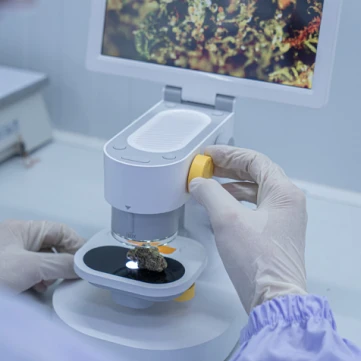
In 2023, Iridescent Med implemented Cannavigia. The decision was grounded in two requirements: eliminate physical documentation from controlled environments, and make compliance records continuous rather than assembled on demand before audits.
The implementation was not trivial. Sarun spent over 100 hours inside the platform during setup: building out cultivation recipes, configuring departmental workflows, and training staff across the operation. He is direct about what that investment requires:
"I spent over a hundred hours in Cannavigia at the beginning. I had to make sure everything was set up right, every recipe, every workflow. Once it's set up properly, it runs. And every month after that, you pay for the platform instead of paying for more people."— Sarun Sereethoranakul, Co-Founder & COO, Iridescent Med
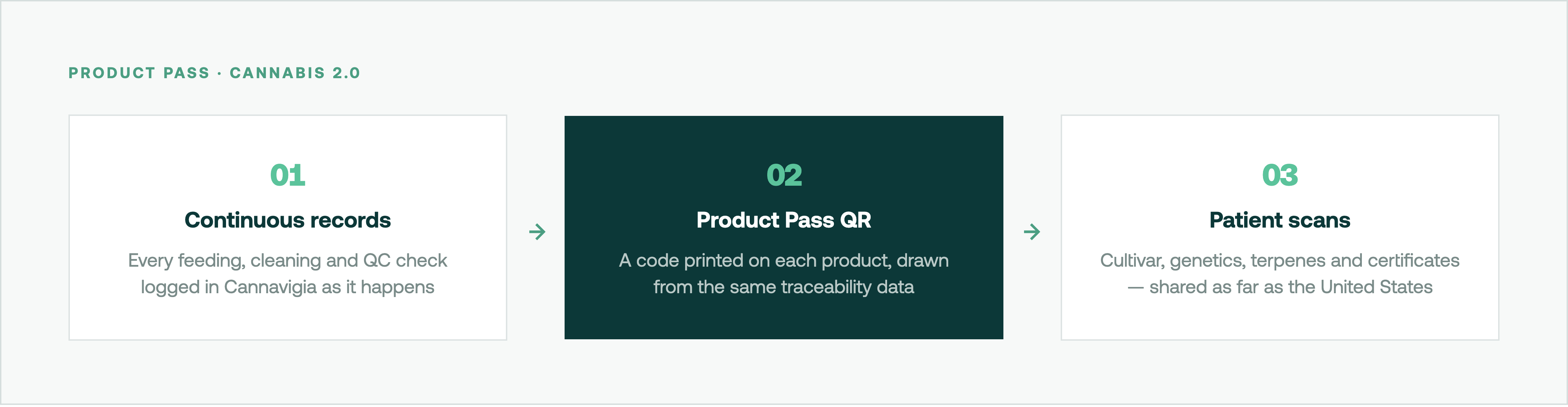
The contamination problem was addressed immediately. Staff in controlled zones now use mobile phones to scan QR codes and log completed tasks, with no paper, clipboards, or physical documents crossing clean room thresholds. The cleaning record that once required a paper sign-off in a controlled area is now a mobile photo with an automatic timestamp, visible to QA management in real time from anywhere in the facility.
Cannavigia integrated with Aroya, Iridescent Med's climate sensor hardware. Temperature, humidity, and CO₂ data across every grow room flow directly into the platform without manual entry. An environmental record that once required a technician to walk the facility with a clipboard now generates itself continuously.
The inventory and procurement loop closed as well. Feeding recipes inside Cannavigia automatically reduce raw material stock on use. The storage team locates specific batches by QR code without opening a box. The cultivation team has reliable harvest timing data, reducing the crop timing losses that Sarun estimates once cost roughly two percent of annual revenue, equivalent to fifteen lost production days across five harvests a year.
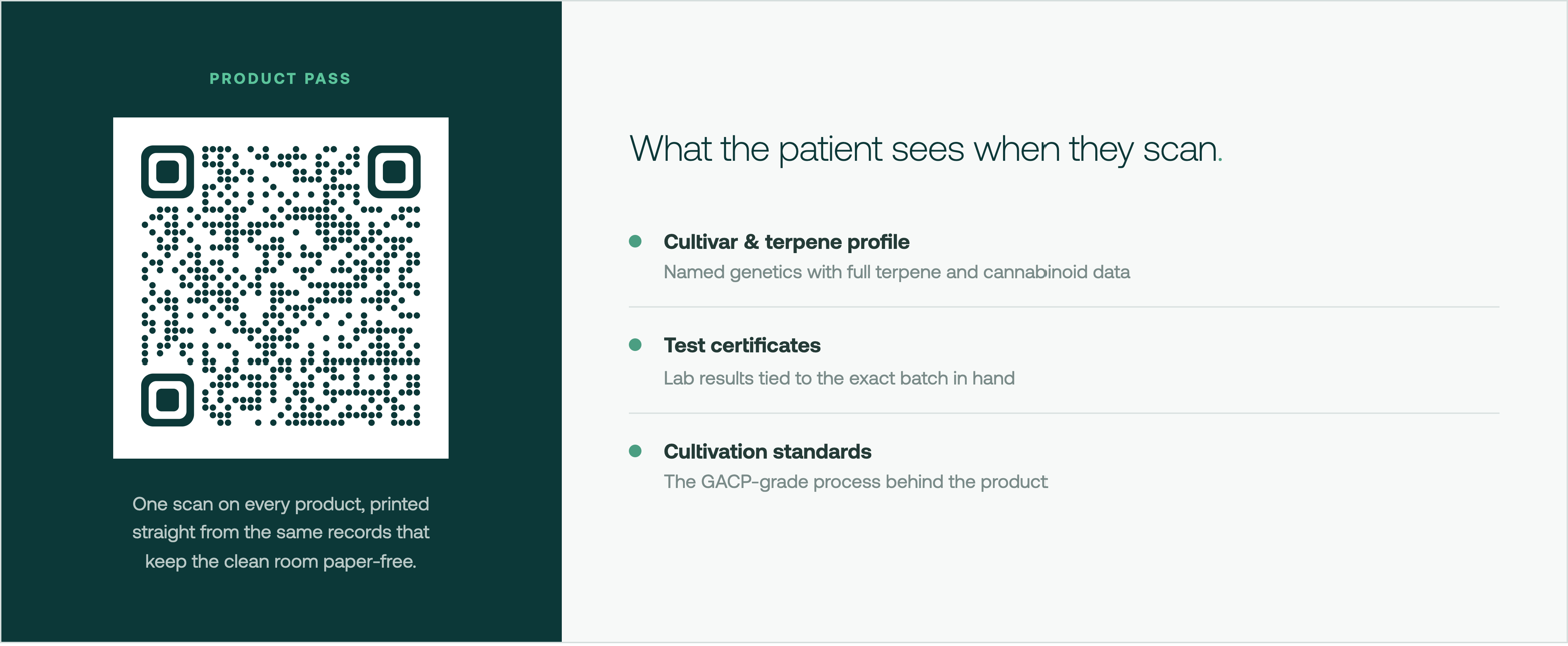
Iridescent Med also activated the Product Pass module: a consumer-facing QR code on each product carrying cultivar and terpene profiles, test certificates, and cultivation standards. The same traceability infrastructure that eliminates paper from the clean room gives patients full visibility into the product they are buying. Their CEO saw the brand implication immediately. Sarun describes what happened next:
"We are in cannabis 2.0 now. The patient wants to know the manufacturer, the genetics, the breeder. The QR code gives them that. Customers are genuinely surprised when they scan it, and we have seen our product information being shared by people in the United States."— Sarun Sereethoranakul, Co-Founder & COO, Iridescent Med
The contamination risk is gone. No physical documents enter the ISO 8 grow rooms, and the QA team's original concern about pens and clipboards in controlled zones is now a solved problem.
The audit efficiency recovery followed directly. Four times a year, what had been a six-day, five-person mobilisation became a report pull. Records are complete because they are built continuously: every feeding, every cleaning, every QC check logged at the moment it happens through the platform. There is nothing to reconstruct before an auditor arrives because there is never a gap between the operation and its documentation.
Across the year, Sarun estimates the platform recovers 1,000 or more man-hours that were previously consumed in audit preparation alone, a figure that does not include the time saved on daily recording, stock reconciliation, or harvest scheduling.
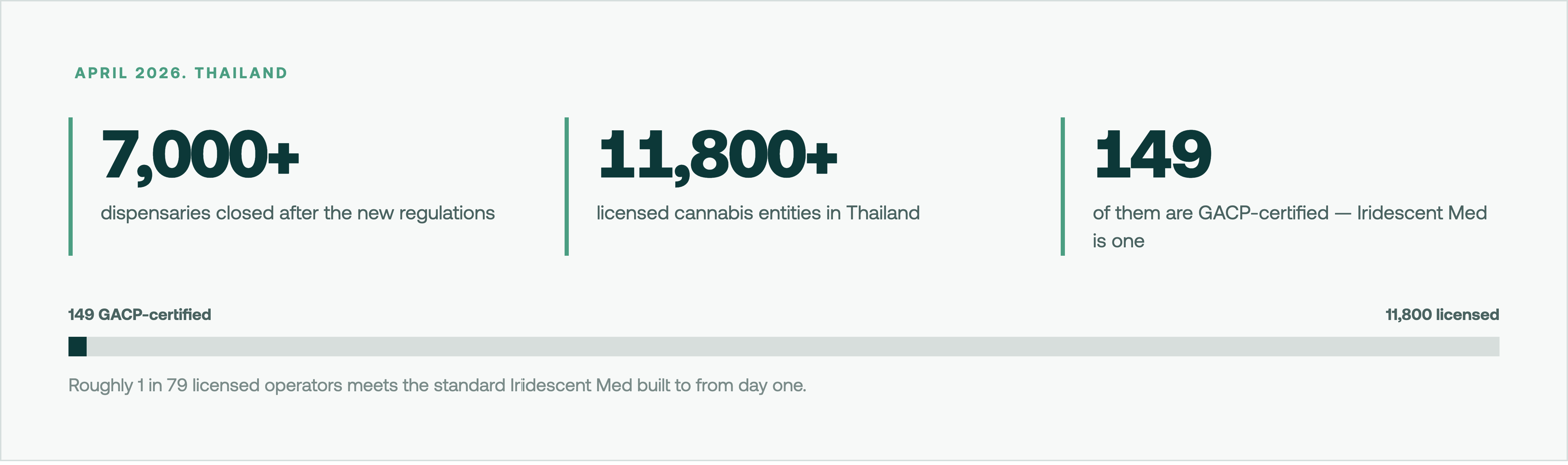
In April 2026, Thailand issued ministerial regulations tightening medical cannabis compliance requirements across the board. Operators who had built businesses under the lighter framework that existed from 2022 to 2024 scrambled. More than 7,000 dispensaries closed. Iridescent Med did not scramble.
The reason was structural. From the beginning, Iridescent Med had been building to Global GACP standard, the documentation framework required for medical cannabis export to Australia and Europe. Global GACP is a superset of Thai GACP. Meeting it automatically meant meeting Thailand's domestic requirements, whatever form those requirements took.
"When we try to comply with Global GACP, we automatically comply with Thai GACP. Everything. The decision to go international actually saved us from a lot of setbacks in our own country."— Sarun Sereethoranakul, Co-Founder & COO, Iridescent Med
Cannavigia was part of why that was possible. Continuous compliance, records built in real time rather than assembled before inspections, means the operation is always audit-ready. When Thailand's requirements shifted, there was nothing to retrofit and no documentation gap to close.
Today, only 149 GACP-certified operators exist among more than 11,800 licensed cannabis entities in Thailand. Iridescent Med is one of them.
The Iridescent Med story is less about software than about a decision made early: build pharmaceutical-grade operations, including pharmaceutical-grade documentation, before anyone required it. In a market where most operators were choosing the minimum viable compliance path, that decision looked like over-investment. When Thailand rewrote the rules, it looked like foresight.
Cannavigia made that decision economically viable for a lean team. A small operation, running an ISO 8 facility, producing to GACP standard, with 60,000 fewer paper records moving through their clean rooms every year: the platform is what closes the gap between pharmaceutical ambition and operational reality.
"Once it's set up and your staff are trained, you pay for the platform instead of paying for more people. It's a more effective return. A very cost-effective solution."— Sarun Sereethoranakul, Co-Founder & COO, Iridescent Med
For any producer in an emerging cannabis market, the question is not whether compliance requirements will tighten. They will. The question is whether the documentation infrastructure will be ready before they do, and whether that infrastructure is compatible with clean room standards, export requirements, and the auditor who will walk through the door four times a year.
Iridescent Med answered those questions in 2023, and the answer still holds today: zero paper in the clean room, continuous records, and audit-ready compliance whenever the next inspection arrives.


